
A Conversation with Past Grand Masters Yandel and Swaney
As we continue to live out this year’s theme of Legacy and Fellowship, we sat down with Past Grand Masters Dan Yandel and Richard Swaney to hear about their experiences, insights, and advice for current and future Freemasons.
Past Grand Master Dan Yandel
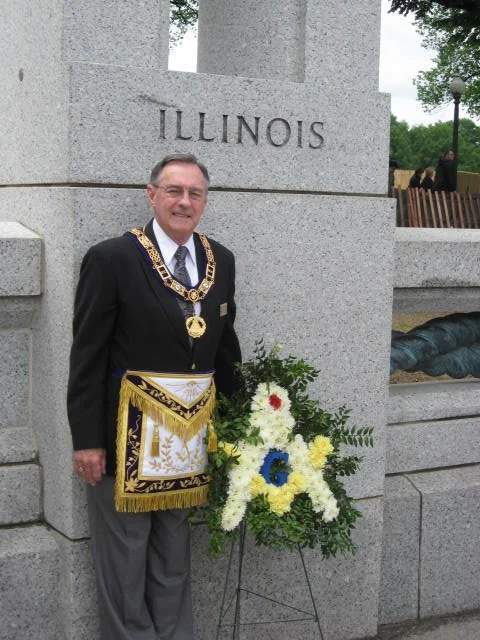
Past Grand Master Yandel in Masonic regalia at a WWII Memorial
How did your Masonic journey begin?
I was fourteen years old when I joined DeMolay in Oak Lawn. I come from a deeply Masonic family — my father, his brother, my grandfather and his brother, two cousins, and my father-in-law were all members. I joined Wyanet Lodge No. 231 in 1971, and after about ten years, we merged into Walnut Lodge No. 722, where I've been active for twenty years and served as Secretary.
My son followed in my footsteps. He's a forty-year member, he received the 33rd Degree, and today he serves the Grand Lodge as Grand Marshal. Watching that happen has meant more to me than I can easily put into words.
What accomplishments are you most proud of from your time as Grand Master?
A few things stand out. Working on the sale of the Masonic Home in Sullivan and directing those resources toward the outreach program, IMOS (Illinois Masonic Outreach Services), was significant. Suddenly, we could help members all across the state, not just those in one location.
I'm also proud of celebrating the tenth anniversary of joint recognition with our Prince Hall Brothers. That evening, hearing the Past Grand Masters who had been part of that original decision speak, that was something special– a real moment of shared history.
But if I'm being honest, what I'm most proud of is the people. I could drive five hours in almost any direction, walk into a lodge, and have almost everyone greet me by my first name. They wouldn’t be disrespectful to the office, they would just be good friends. That's the fellowship this organization is built on. That's what I was most grateful for.
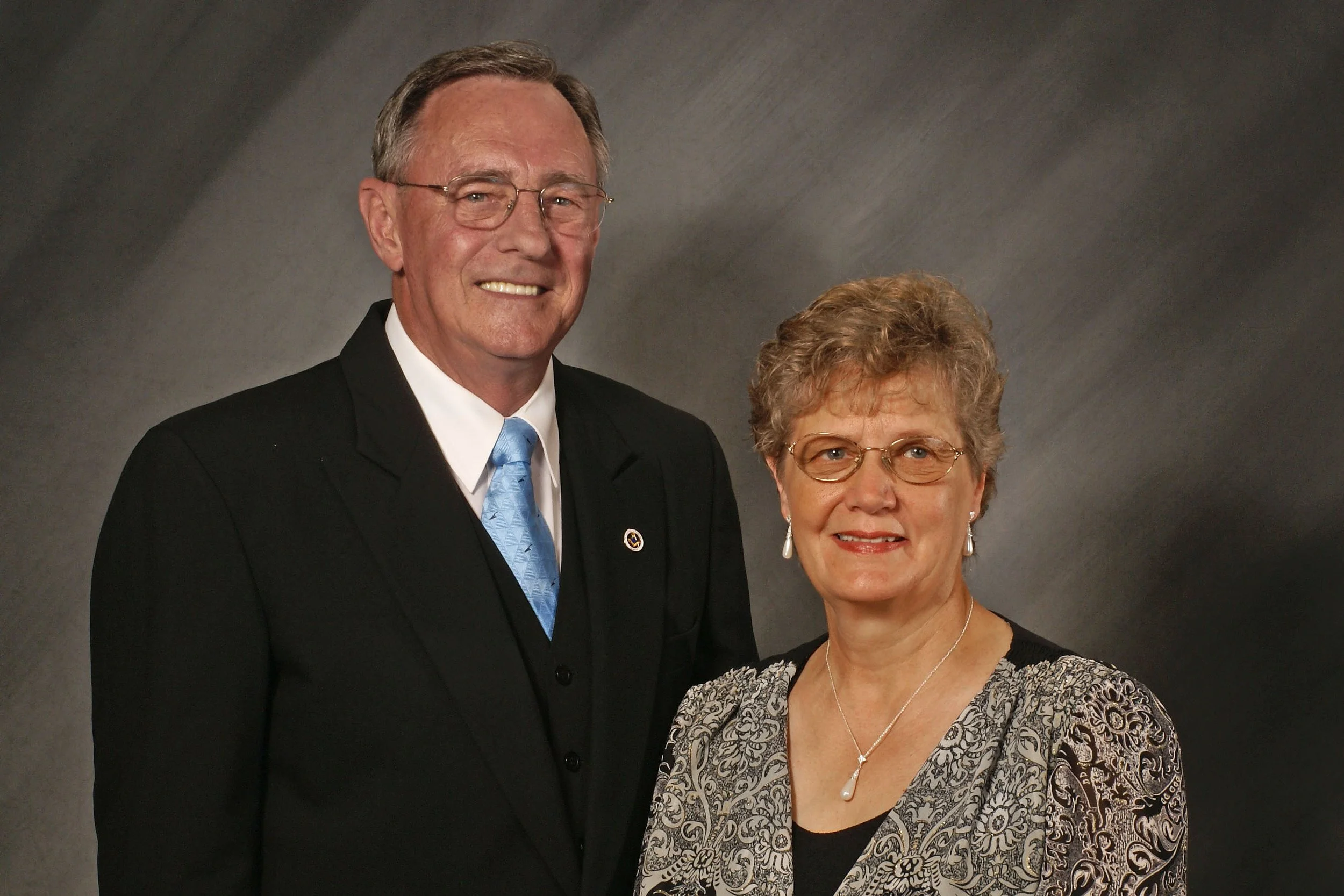
Formal picture of Past Grand Master Yandel and his wife, Carol
What would you advise the current Grand Master?
Be yourself. Being Grand Master is a great honor — don't let it consume you. Be the Grand Master when the moment calls for it. The rest of the time, just be Brother Joe. Above all, make things happen so that you get to genuinely enjoy your time in the office. It goes faster than you think.
How do you think about your own legacy?
Honestly, I've never thought much about legacy. If I had to say something, I'd hope to be remembered as a good, fair, and friendly Grand Master — someone not afraid to face problems or make necessary changes. But more than anything, I'd like to be remembered as a teacher. Not just of ritual and floor work, but of the principles Masonry asks us to live by every day.
I've helped fourteen members become instructors.
I'm still active in my lodge, still helping with degree work, still visiting Brothers wherever I can. That's the legacy I care about — not a plaque, but people who are still learning and still teaching because of something I passed on.
Is there a particular moment you'll never forget?
There were about seven hundred people at the Grand Lodge banquet the night I was installed. Past Grand Master Ben Grisham was the installing officer, and everything was going beautifully until the moment came to present me with the gavel. In all the planning, no one had remembered to bring one. The room went completely silent.
Without missing a beat, PGM Grisham reached down and picked up one of the small white coffee cups on the table. He looked at the room, looked at me, and said: "I now present you with the gavel of this Grand Lodge." You could have heard a pin drop — and then everyone started laughing. PGM Grisham and I both started laughing. The rest of the installation went on as planned, but there was a warmth in that room for the rest of the evening that I don't think would have been there otherwise.
I still have that cup. It sits in my collection at home, and it reminds me that fellowship makes room for laughter — and that the best moments are often the unplanned ones.
Past Grand Master Richard Swaney
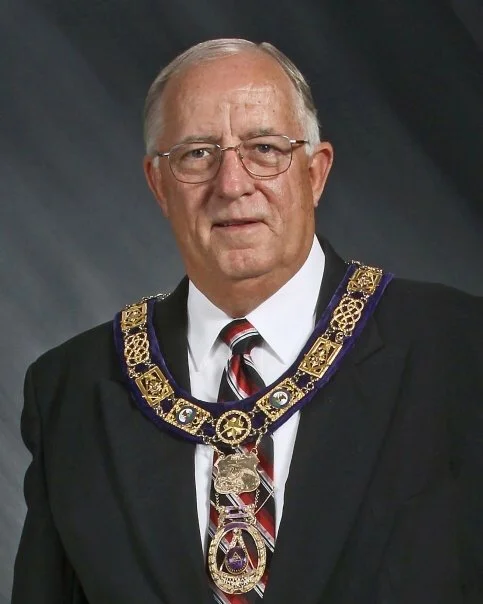
Past Grand Master Richard Swaney in Masonic Regalia
Could you please share a bit about yourself and your time as a Freemason?
My grandfather was my first introduction to Freemasonry — he's the one who planted the seed. Brothers Grisham and Miller took it from there, encouraging me and eventually convincing me to run for Grand Master.
What was the most significant thing you accomplished as Grand Master?
The most important thing I ever did happened on day one. For years, the path to Grand Master ran straight through the Board of Grand Examiners — the men who teach all the Masonic memorization work. You came up through them, and that was the requirement. I want to be clear: those men worked tremendously hard, and I'm not taking anything away from them. But the sense I had from the membership was that they wanted something more; maybe some business-mindedness, maybe some broader leadership experience.
Other Brothers had tried to break that chain before me. I tried too, and perhaps because I'd lived in both the Chicago area and the southern part of the state, I was known in enough places to make a difference. I was up against a fine team that year, but I was chosen to join the Grand Line. And it changed the progression forever. Now, anyone can apply to join the Grand Line. That was the goal, and I think it worked. More Grand Lecturers have been included since then, not fewer. It opened the door without closing any others.
Who inspired you to take on leadership, and what drove you forward?
My grandfather was first. Brothers Grisham and Miller were probably second and third. I had spent about fifteen years working with Grand Masters, not for them, but alongside them. During that time, I had the privilege of helping build a children's home in southern Illinois under Grand Master Durbin. There wasn't anything like it in the southern part of the state at the time, and it was a big deal for those communities.
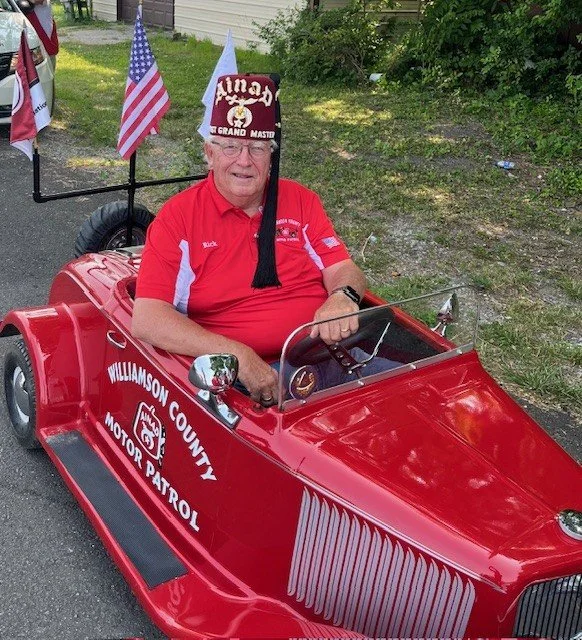
Past Grand Master Swaney at a Shriner’s event
What would you advise the current Grand Master?
Two things. First: bring the families in. When I was Grand Master, we tried hosting dinners for newly raised Master Masons and their wives — a chance for families to meet, ask questions, and feel included. It worked well, but nobody kept it going after me. I'd encourage Grand Master Ferrell to try that again.
My own wife started out asking, "Are you going to lodge tonight?" and eventually it became, "Which lodge are you going to tonight?" That shift — from uncertainty to support — it matters more than people realize. You get the family on your side, and you keep your Brothers.
Second: never let anyone say "the Grand Lodge." It's our Grand Lodge. The members make it what it is. They make the rules. You have to keep that mindset alive — in yourself and in everyone around you. The moment it starts feeling like something that belongs to just the officers, you've lost something important.
Is there a moment from your time as Grand Master that stands apart?
We were able to bring Brother George Washington's personal Bible to our Grand Lodge — it had never been to Illinois before. The lodge that owned it sent it under glass, with guards, handled with tremendous care. Everyone wanted to see it, wanted their picture taken with it. But what I remember most is taking my own obligation on that Bible. That was something I'll carry for the rest of my life.
And alongside it, we had General and Brother Lafayette's sword — the one he left with Kaskaskia Lodge when he toured the States after the war. Brothers Lafayette and Washington were great friends, and the sword and the Bible had never been in the same room before that day. It was a history lesson and a Masonic moment all at once. That's what our fellowship can do when it honors its own legacy.
What are you up to these days?
I'll tell you, when I retired, I thought I was going to relax a bit. That didn't quite happen. This morning, I was out tapping maple trees before our conversation, and I’m still active in the organization. But that's the values of Masonry, isn't it? You never really stop. The fellowship keeps pulling you back in.
Two men, two tenures, two distinct journeys — and yet the same thread runs through both. Legacy is not claimed; it is cultivated over time, in the people you mentor, the doors you open, and the friendships that outlast every office held. Fellowship is not incidental to Masonic life, but it is the very reason the institution endures.
For more insights from Past Grand Masters, see our blog interview with Brothers Oakley and Clark.