
Why Traditional Men's Organizations Still Matter Today
Genuine conversations occur when men feel safe to remove their symbolic armor and comfortable enough to share their thoughts, aspirations, and challenges. The combination of a deep desire for meaningful personal connections and a foundation of trust underscores these special moments spent sitting together. Throughout the years, I've had the privilege of participating in these types of conversations, serving as a mentor to countless men. Regardless of age or background, a common search for relevance, purpose, and meaning in their lives shines through. Some acknowledge having many acquaintances, but no one who really cares. Others have achieved career success and feel that service to something bigger is missing. Overall, the ability to feel confident, supported, useful, and understood is something unspoken by many men, and deeply desired by most.
In our present age, the digital tools in our lives provide ways to interact with substantial numbers of people, yet a void of impactful personal connection is growing. In 1990, about a quarter of Americans (27%) reported having three or fewer close friends; in 2021, that number jumped to 47%. For many men, the exact statistics aren't needed to frame the story — they feel it personally. It is not just the absence of someone who really has your back in times of challenge that is missing; it is also the absence of a kind word and support for passionate aspirations about improving, learning, growing, feeling useful to the people around you, or simply just being a better person.
Another emerging issue is a profound feeling of loneliness. In 2023, the United States Surgeon General's report labeled “loneliness” as an epidemic and compared its health risks to smoking 15 cigarettes per day. The trends are telling, the gap exists, and the impact is real.
A Lesson from Our Recent History
Can we learn something from our more recent history that can inform a brighter way forward?
Not too many decades ago, a cultural norm in the United States was more grounded in “We” (friends, family, neighbors, and community) and less on “I” (the individual). During the “We” times, men had places to go regularly where others knew their names, were happy to see them, valued their conversations, and spent decades watching each other grow. Along the way, these men met mentors (and some eventually took on that work for others) in the sincere goal of gaining skills, navigating life more effectively, and flourishing together. Through that shared success and support, these men thought broader, bolder, and took on community, charitable, and other endeavors that were outward displays of shared internal values.
Said simply, traditional men's organizations that meet in person regularly provided the foundation, structure, and chemistry for men to thrive.
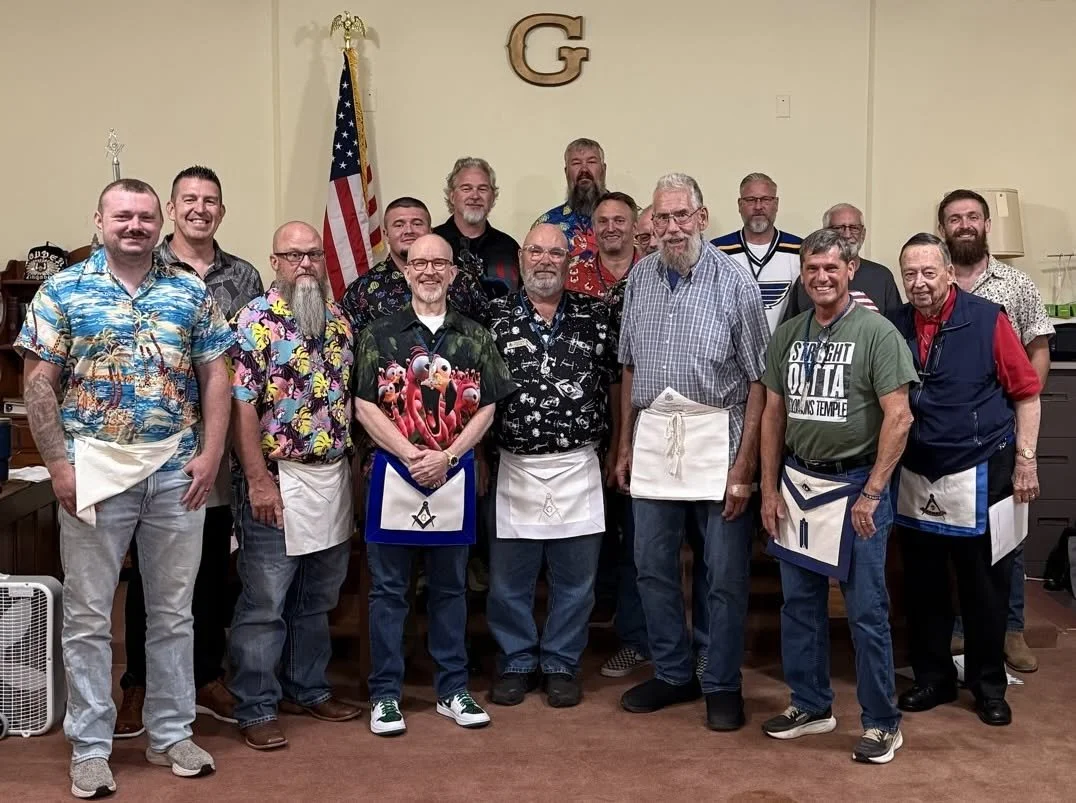
Brothers from Harmony Lodge No. 3 in Jacksonville, IL
How Has Freemasonry Endured for Centuries?
For centuries, Freemasonry has served as a model for countless men's organizations across the globe. Our ancient and honorable fraternity has quietly been the exemplar and inspiration for the transformative power of organizations dedicated to the growth, support, and positive development of men in society. Since the early 1800s, Freemasonry has served to help good men in Illinois become better versions of themselves — whether they are farmers, tradesmen, teachers, veterans, business owners, or civic leaders.
Many of our Lodges are among the first incorporated entities in towns and counties across Illinois. Scott Lodge No. 79, located in Carlyle, was chartered in 1849 and has continuously been a cornerstone of community development, growth, and support for more than 176 years. That continuity has positively impacted the lives of multiple generations of men — grandfathers, fathers, sons, uncles and nephews who took on a deeper connection and meaning to one another as Brothers in our fraternity.
Timeless, Yet Adaptable
Some may think that our fraternity is outdated, yet this quote is a more accurate depiction:
Freemasonry is one of the most nimble, flexible, and adaptable organizations in history.
We have retained what is timeless about building an environment for men that supports self-improvement, building meaningful friendships, and being useful to family members, neighbors, and the broader community. At the same time, we have successfully navigated the changing technological, social, and cultural norms that have evolved over time. We have persevered through every societal change that was deemed disruptive in its current age.
How? The fraternity provides a sanctuary to shut out the noise of the day and focus on what matters — talking to one another, passing along wisdom through our unique teaching system of ritual and symbols, and learning to be better fathers, neighbors, and citizens. Fundamentally, Brothers just cherish being there for one another across decades until we lovingly say a final farewell at a Masonic funeral service.
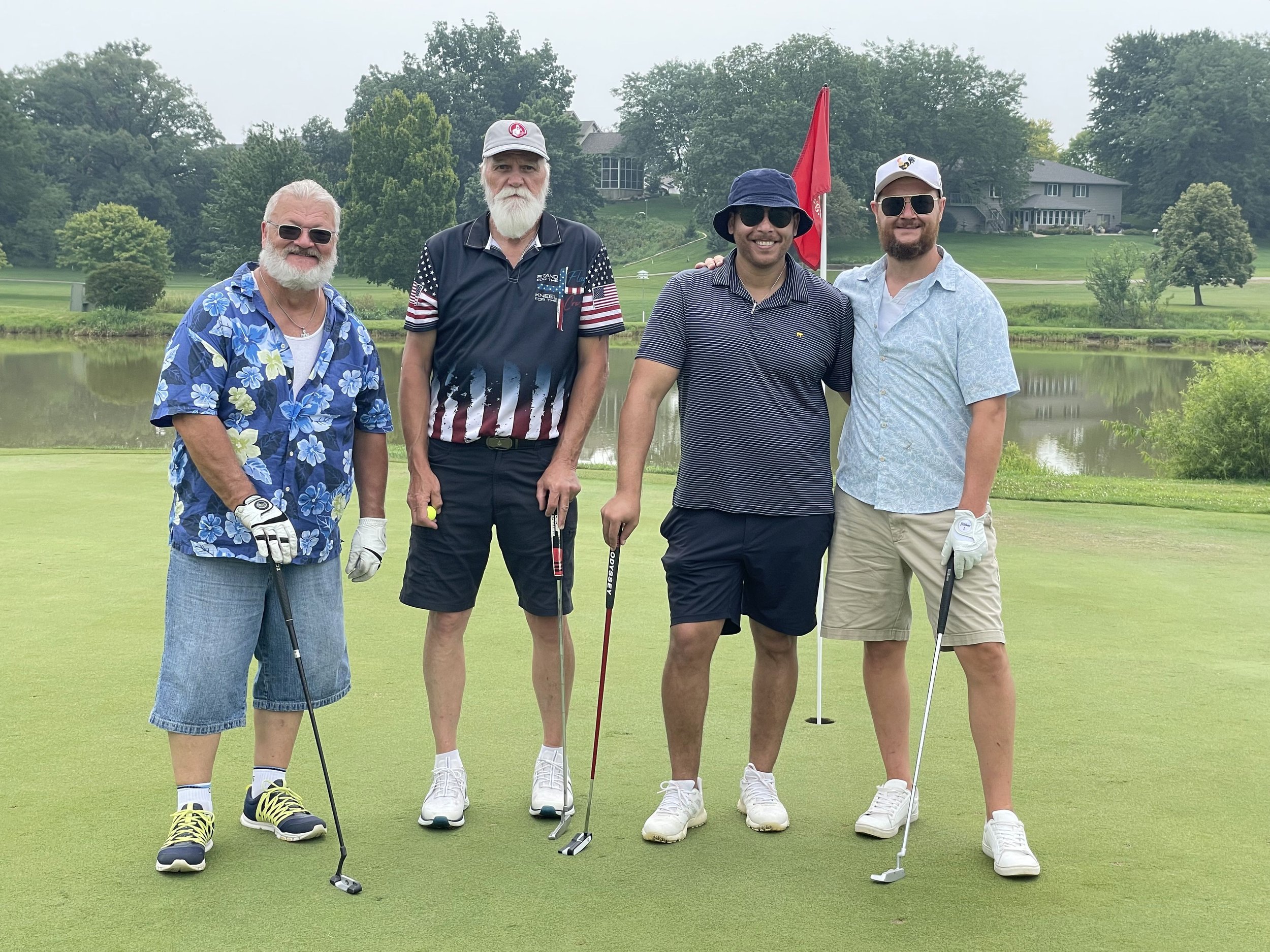
Brothers of multiple generations playing golf and spending time together
Why Does This Still Matter?
Let's conclude where we began. Meaningful conversations, trust, genuine connections, learning, and a sense of purpose are all desires that men have, even though not spoken about regularly. In Freemasonry, we have been providing those experiences for our Brothers across centuries and around the globe. Our local Lodges serve as the cornerstone of communities — proving that good and honorable men do exist who embrace integrity, service, and the really hard work of improving themselves.
That legacy is alive, and men who are joining the fraternity today are embracing their important role as stewards to ensure that the fraternity is here a century from now.
Even though our fraternity still references the age-old tools of our operative Brethren, we stay steadfast in our ongoing work as a Speculative Craft of Builders — building men of character, honor, and values. Yes, that all still matters in society today.
If this message resonates with you, then know that Freemasonry exists to support good men like yourself and provide the guidance to build a better version of you. I welcome you to reach out and express your interest in joining — the first step is to connect with local Masonic leaders for a conversation.
About the Author
Right Worshipful Brother Wayne Spooner has been a Master Mason for more than 33 years. He is the Chairman of the Grand Lodge Membership Committee and the Grand Lodge Masonic Awareness Committee. He serves as a member of the Grand Lodge Board of Grand Examiners, a team of experts who accurately teach and perpetuate our ritual ceremonies, and has also served as a past Grand Chaplain.
In recognition of Outstanding Service to the members of Freemasonry in Illinois, Brother Spooner was chosen from among the approximately 50,000 members in the state as the 2022 Mason of the Year, adding his name to the distinguished group of men who have received this annual award during the fraternity's 182-year history in Illinois (since 1840).
Frequently Asked Questions
-
Because the needs they were built to meet haven't gone away. Men still want meaningful conversations, mentorship, a sense of purpose, and people who genuinely have their backs. What has changed is how hard those things are to find. In 1990, roughly a quarter of Americans reported having three or fewer close friends; by 2021, that number had nearly doubled. Organizations that meet in person, month after month, across generations offer something that digital connection cannot replicate.
-
In 2023, the United States Surgeon General issued an advisory identifying loneliness and social isolation as a public health crisis, comparing the mortality impact to smoking 15 cigarettes a day. Traditional fraternal organizations respond to that crisis in a specific way: they give men a place to be known by name, to be missed when absent, and to grow alongside the same group of people over decades. That kind of sustained, in-person connection is precisely what public health research points to as protective.
-
Freemasonry has retained what is timeless — self-improvement, meaningful friendship, service to family and community — while adjusting how it operates in every era. The fraternity has persevered through wars, industrialization, the rise of mass media, and the digital age by keeping its core purpose intact and updating everything else. That is why the fraternity can be described, accurately, as one of the more adaptable organizations in continuous operation.
-
Operative Masons were the working stonemasons of earlier centuries who literally built cathedrals and public buildings. Speculative Freemasons, today's Brothers, use the tools and symbols of that craft to build something different: men of character, honor, and values. The essay's phrase "Speculative Craft of Builders" captures this. The tools are the same; the work has moved from stone to self.
-
The first step is a conversation. If Brother Spooner’s essay resonates with you, visit ilmason.org/join-us to express your interest, and a member of a local Lodge will reach out. There is no obligation and no guarantee of membership on either side — the process is meant to be thoughtful, so both you and the Lodge can decide whether it is a good fit.