
Meet RWB Reuben Owens, Board of Grand Examiners Chairman
The first time Right Worshipful Brother Reuben Owens of Paul Revere Lodge No. 998 petitioned a Lodge, he was turned down.
He doesn't dwell on it now, but he hasn't forgotten it either. It took him several more years to work up the courage to try again, and when he finally joined Freemasonry in 2007, he threw himself into Lodge life almost immediately.
Today, Brother Owens serves as chairman of the Grand Lodge of Illinois A.F. & A.M. Board of Grand Examiners, the statewide committee responsible for Masonic ritual instruction across the jurisdiction. With the Grand Lodge's new Ritual Instructor page now live on the website, we sat down with Brother Owens to talk about how a denied petition turned into two decades of teaching, and what it actually takes to carry the title of Ritual Instructor.
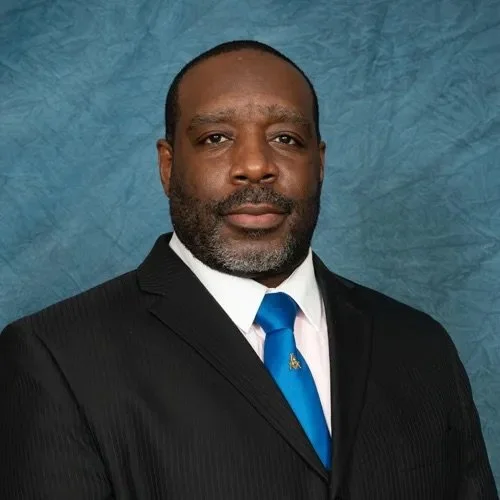
Right Worshipful Brother Reuben Owens
The Moment Ritual Became His Calling
Brother Owens traces his interest in Freemasonry back to his Army days in the 1990s, when a friend back home described the square and compasses to him. "I started to notice those emblems everywhere," he said, "and the fraternity concept intrigued me. You could be part of something widely used by people across the world, and not even know who they are, but you have that connection." That pull toward fraternity finally brought him through the door in 2007, after his first attempt was denied years earlier.
Once he was in, it didn't take long for Brother Owens to find his focus. "It was my very first degree," he said. At the close of the ceremony, members deliver long talks that explain Freemasonry's deeper meaning, and something about how they were presented stayed with him. "There was a moment where I was like, that's it. That's what I want to do."
He became an instructor in 2009 and a Certified Lecturer soon after, the designation given to a Grand Lecturer who has not yet served as Worshipful Master of his Lodge. From there, he kept teaching, kept studying, and eventually landed on the Board of Grand Examiners, where he now serves as chairman.
What the Board of Grand Examiners Actually Does
In Brother Owens's own words, the Board of Grand Examiners is "a committee of ritual instructors at the highest level." Illinois has several tiers of ritual instructorship, and the Grand Examiners sit at the top of that structure. The Board certifies that instructors across the state remain proficient, examines Brothers who want to earn an instructor's commission, and reviews any proposed changes to the ritual before they're brought to the Grand Master. "That's why they call us examiners," he said. "We examine members and see if they're proficient enough to become instructors."
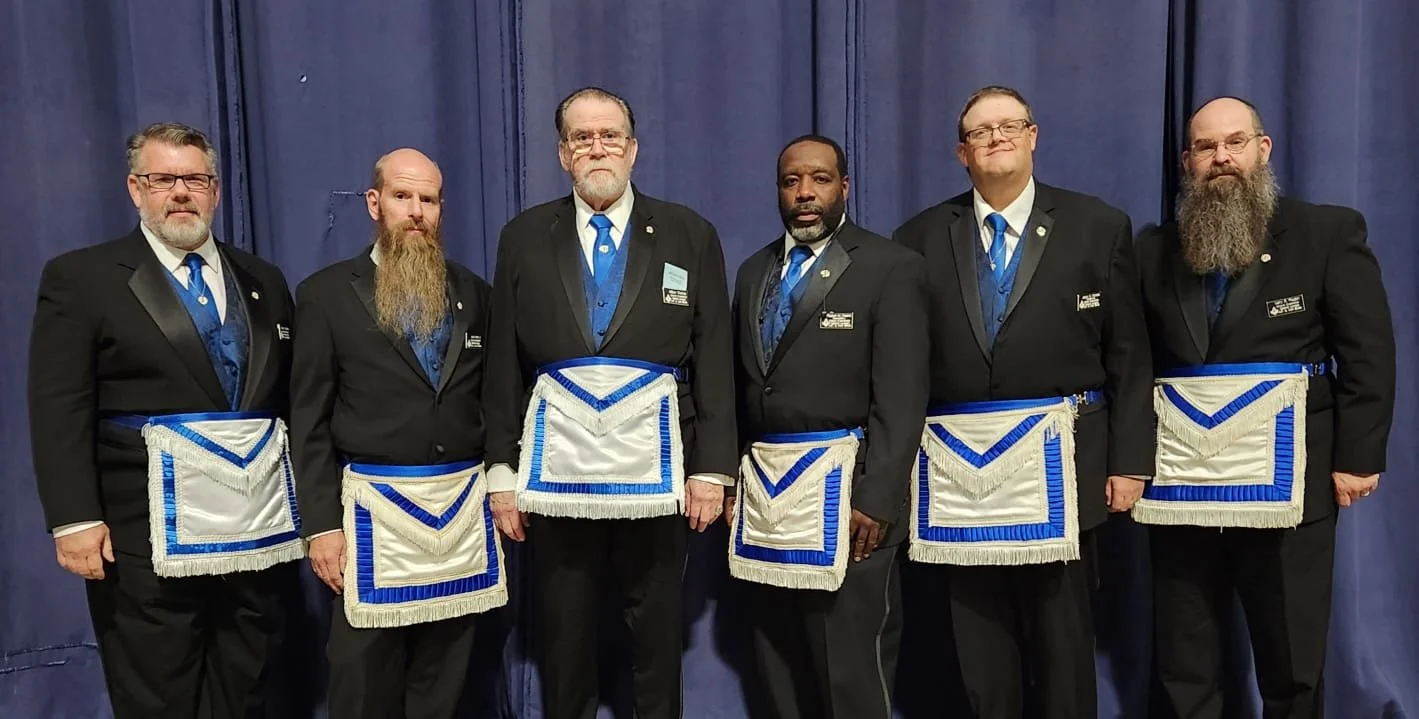
RWB Reuben Owens (third from right) alongside the rest of the Board of Grand Examiners in 2023
The Board also travels the state each year to host what's called the Grand Lecturer School of Promulgation, a full exemplification of the ceremonies performed the correct way, with commissioned instructors executing the work while the Board narrates, explains, and answers questions. Promulgation, Brother Owens noted with a laugh, is just a fancy word for doing something correctly.
Carrying the Title of Ritual Instructor
For all his dedication to ritual, Brother Owens said becoming an instructor was never really the goal. "Even though I realized quickly that I was interested in the ritual, it was only because I wanted to be able to perform all the ceremonies," he said. "Since there's a standard way of doing them, I wanted to be able to perform all of them without worry."
Teaching came later, and it turned out to suit him. He had already done some substitute teaching and found he liked it, though he always wanted to work with adults rather than children. Ritual instruction gave him that chance. "Instructorship is precisely what it's called," he said. "You're qualified to teach others the work. You can create your own school of instruction, and it also allows others to look to you for insight on how to do things correctly."
Memorizing vs. Learning
Brother Owens gets the same question constantly: how does he memorize so much ritual? His answer is to separate memorization from learning entirely.
"When you know something, it's easier to memorize it," he said. "The mistake people make is they read a passage and try to commit it to memory without actually knowing what it means." He compares it to a college course, which typically splits into a discussion section, where a small group works through the material with a teaching assistant, and a lecture, where a professor who has mastered the subject speaks from knowledge rather than reading from a book.
"If you want to teach somebody something, because this ritual is our mode of teaching, you should be an expert at it to do so."
The Most Common Stumbling Block He Sees
When asked what trips up Brothers pursuing an instructor's commission, Brother Owens explained it's less about memorization and more about motive."There's a bravado to it," he said. "I know the whole first degree, so I'm good at this; therefore, I want to take the exam."
The Board regularly sees candidates who want to pass the exam for the recognition without necessarily wanting to be instructors. "We're trying to bridge that gap and make it about being an instructor, more so than 'I passed the board and got my commission.' I think it's just a misconception of what the purpose is."
A Debt to Brother Jim Brown
When asked about a Brother or a moment that has stayed with him, Brother Owens didn't hesitate. He credits his development as an instructor to the late James "Jim" Brown, whom he calls the best instructor the state has ever produced. "From the first lesson I got from him, I thought this guy has to be the best," he said. "I have not since encountered an instructor better than he was."
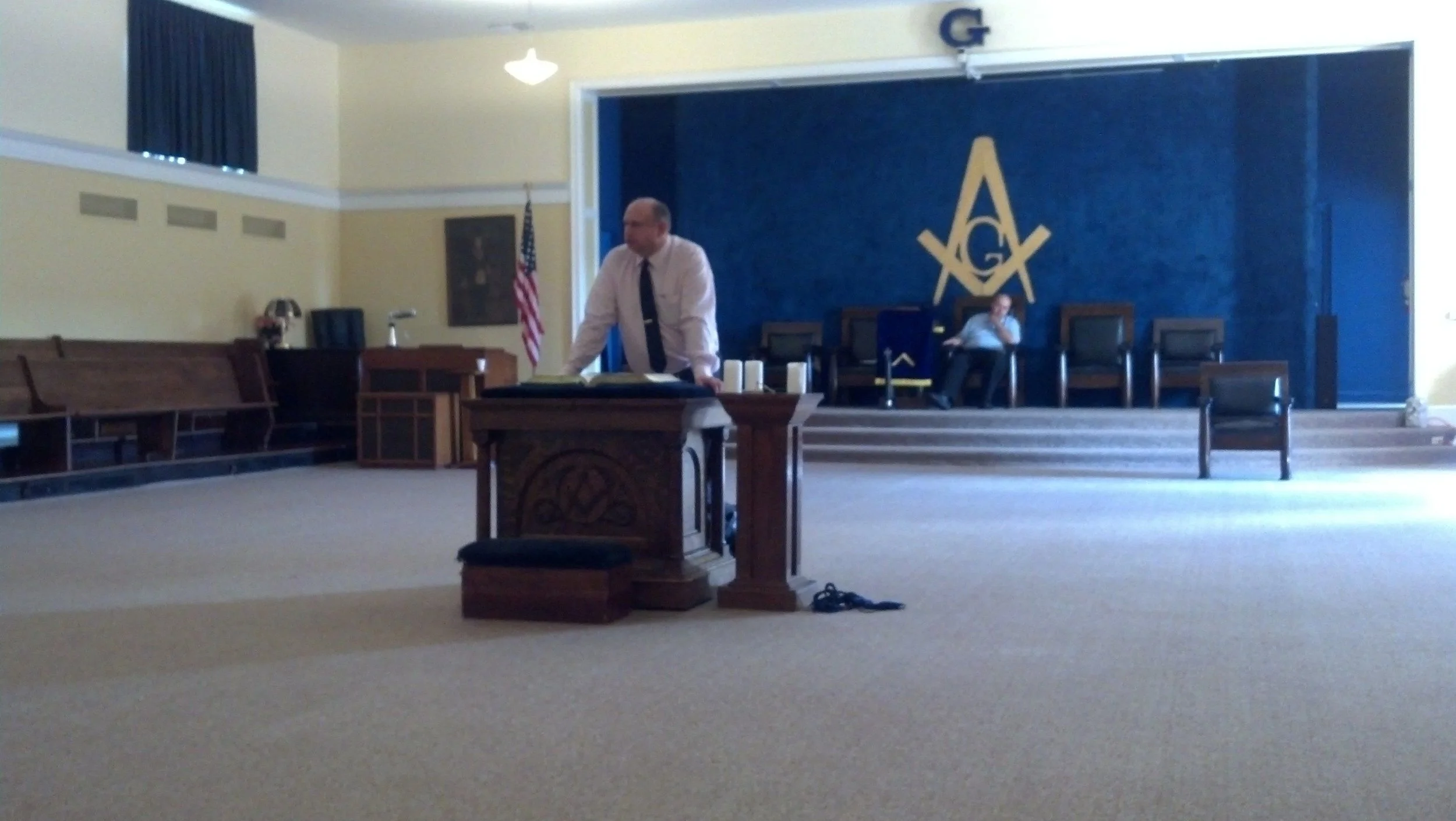
Brother Jim Brown at our regular school of instruction in Downers Grove, IL
Brother Brown became both an inspiration and, eventually, a colleague, a goal Brother Owens says he's grateful to have reached.
Why Ritual Still Matters
Brother Owens often describes Masonic ritual as the calling card of the fraternity. Illinois Freemasonry shares its charitable work and its sense of brotherhood with plenty of other organizations, he pointed out, but ritual is what makes it distinct.
"We call it ritual, but it is teaching," he said. "It is teaching our philosophies. It's important that we know it and be experts at it, because our main purpose is to continue to grow our fraternity, and we do that through our ceremonies. There's only one way to come into the fraternity, through the rituals and ceremonies."
On a personal level, he takes that responsibility seriously. "If I'm a part of something, I want to be an expert at it, especially if I'm going to be teaching somebody else about it."
Brother Owens is a member of several Lodges, with his home Lodge being Paul Revere Lodge No. 998, where he was raised and served as Worshipful Master in 2013 and 2018. He is also a member of Lux Lunae Lodge No. 1181, where he served as Worshipful Master in 2022.
Frequently Asked Questions
-
Right Worshipful Brother Reuben Owens is a member of Paul Revere Lodge No. 998 and Lux Lunae Lodge No. 1181, and he serves as chairman of the Grand Lodge of Illinois A.F. & A.M. Board of Grand Examiners. He has been a Mason since 2007 and a comissioned Ritual Instructor since 2009.
-
The Board of Grand Examiners is the statewide committee responsible for Masonic ritual instruction in Illinois. It certifies that instructors across the state remain proficient, examines Brothers seeking an instructor's commission, and reviews proposed ritual changes before they go to the Grand Master.
-
It's a statewide training event the Board of Grand Examiners hosts several times a year in different parts of Illinois. Commissioned instructors perform the ceremonies correctly while Board members narrate each step and answer questions from attendees.
-
According to Brother Owens, memorization sticks best once the material is actually understood. He compares it to a college course: reciting a passage without grasping its meaning is memorization, while being able to discuss the material from knowledge, the way a professor lectures, is learning.
-
He encourages Brothers to focus on wanting to teach ritual, not just wanting to pass the certification exam. In his experience, the most common misstep is treating the commission as proof of what you already know rather than as a responsibility to help others learn it well.