
Mark Twain & the Craft: A Masonic Look at an American Legend
Few figures in American literature have left as lasting a mark as Mark Twain, born Samuel Langhorne Clemens. Known for his wit, sharp social insight, and iconic works like The Adventures of Tom Sawyer and Adventures of Huckleberry Finn, Brother Twain also carried a deep connection to Freemasonry—a Brotherhood that helped shape his perspective during some of the most formative years of his life.
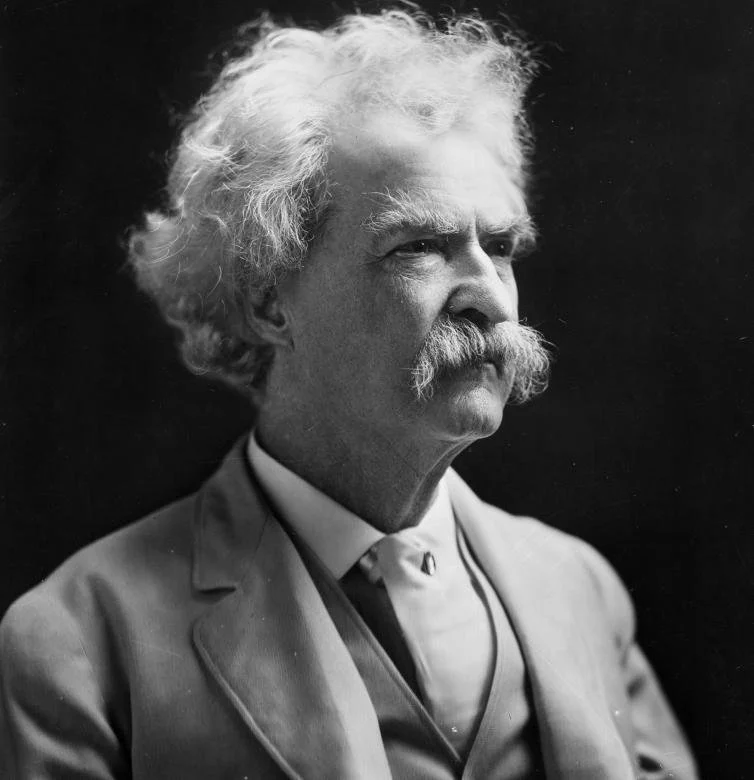
Brother Mark Twain
Early Life & A Path Toward the Craft
Born in 1835 in Florida, Missouri, Samuel Clemens grew up with the values of duty, community, and self-improvement—principles that would later resonate with him in the Masonic lodge. Before becoming a literary icon, Brother Twain worked as a printer’s apprentice, a steamboat pilot, a miner, and a journalist. Throughout these transitions, the idea of fraternity and moral grounding steadily attracted him to Freemasonry.
Twain’s Masonic Journey
Twain petitioned Polar Star Lodge No. 79 in St. Louis, Missouri, in 1860, a time of tremendous national tension and personal uncertainty. He was initiated as an Entered Apprentice on February 18, 1861, and was raised to the Master Mason degree by July of that year. Polar Star Lodge No. 79 had a membership full of river pilots, giving a hint as to why Brother Twain might have been inspired to join Freemasonry.
With his literary success came extensive travel, pulling Brother Twain away from his Lodge in St. Louis for long periods. While journeying through Europe and the Near East, he developed a profound appreciation for Lebanon and its historic associations with the Craft. In a gesture of fraternal respect, he secured a piece of Lebanese cedar, had it worked into a gavel, and sent it to the Worshipful Master of his mother Lodge.
A Brother Whose Influence Lingered
Although Brother Twain eventually drifted from lodge activity due to travel and career demands, Freemasonry remained a meaningful part of his worldview. His letters and other writings show a man who valued his Masonic experience. In The Innocents Abroad, Brother Twain weaves in Masonic language, including references like “the Great Architect of the Universe,” a subtle acknowledgment of his Masonic background.
Many scholars note that Brother Twain’s enduring themes—challenging injustice, confronting moral hypocrisy, and emphasizing the worth of every individual—mirror the teachings he encountered as a young Mason.
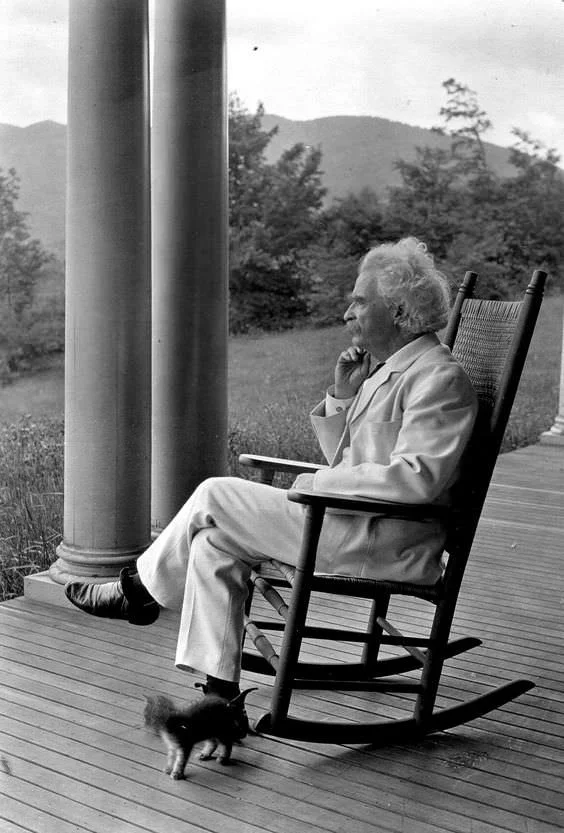
Mark Twain smoking a cigar
Why Twain Matters to Illinois Masons
Brother Twain never lived in Illinois, but his Masonic legacy resonates strongly with Freemasons across this state. His life reminds us that the Craft has always attracted men seeking truth, character, and connection and that its timeless lessons continue to influence leaders, writers, and thinkers across generations.
For the Grand Lodge of Illinois A. F. and A. M., Brother Twain’s story stands as a reminder that:
Freemasonry shapes good men in every era
Light gained in the lodge can illuminate an entire lifetime
The values we uphold today are the same values that guided the great minds of the past
A Legacy Still Teaching Us Today
Brother Mark Twain’s humor and insight changed American literature. His Masonic experience helped shape the man behind the pen.
More than a century later, his life still speaks to the heart of our fraternity: the pursuit of wisdom, the call to better ourselves, and the belief that good men, working together, can transform the world around them.
References
This blog references the Scottish Rite, NMJ’s blog The Masonic Life of Mark Twain, in which research was conducted through the following works:
Taken from: “Mark Twain and Freemasonry”, by Alexander E. Jones. Source: American Literature, Vol. 26, No. 3 (Nov. 1954), pp. 363-373. Published by: Duke University Press.
10,000 Famous Freemasons by William R. Denslow Vole I A-D
Learn More About Famous Masons
Interested in exploring the lives of other noteworthy Brothers? We have multiple profiles on our blog, such as: