Manly P. Hall: Philosopher, Mystic, and Freemason
Few names in 20th-century esoteric thought carry as much weight as Brother Manly P. Hall. Best known for his landmark 1928 work, The Secret Teachings of All Ages, Brother Hall devoted his life to exploring ancient philosophy, symbolism, and the pursuit of universal wisdom; themes that sit at the very heart of Freemasonry. His remarkable story is a reminder that the values Illinois Freemasons hold dear—honor, integrity, learning, and service to mankind—can take root in a man long before he ever sets foot in a lodge.
Who Was Manly P. Hall?
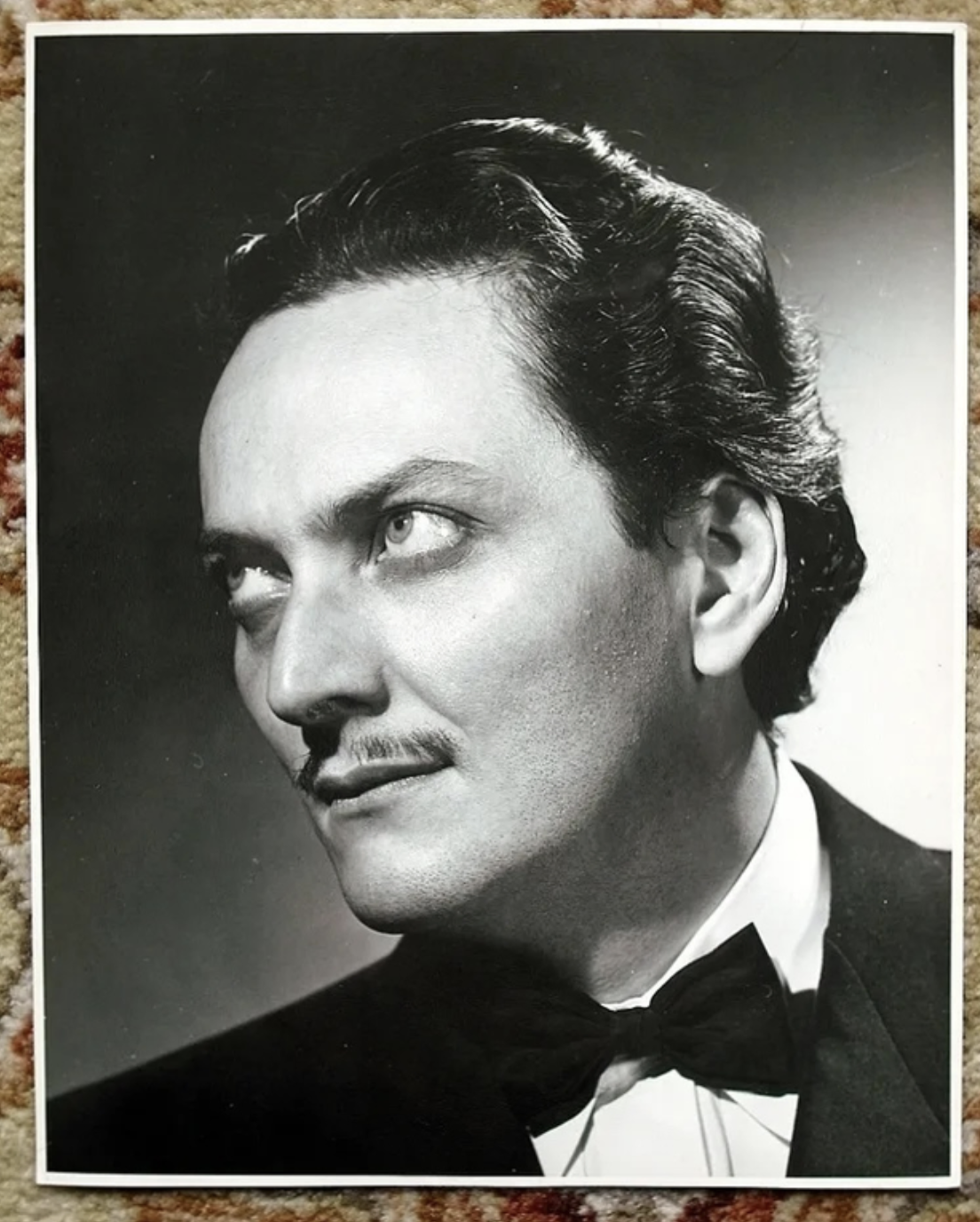
Illustrious Brother Manly P. Hall
Born in 1901 in Peterborough, Ontario, Canada, Brother Hall moved to California as a child after the early death of his father. Largely self-educated and raised by his maternal grandmother, he developed a deep fascination with metaphysics, alchemy, astrology, and the world’s spiritual traditions. By the age of 21, he was delivering lectures in Los Angeles on the teachings of Plato, Pythagoras, the Hermetic philosophers, and more.
In 1928, at just 27 years old, Brother Hall published The Secret Teachings of All Ages, a 700-page, richly illustrated encyclopedia of ancient symbols, initiatory rites, and esoteric philosophy. Financed through a subscription campaign and released in an oversized folio edition, it was a bold achievement that established Brother Hall as a serious scholar of comparative religion and occult tradition.
When Did Manly P. Hall Become a Freemason?
Interestingly, Brother Hall was not yet a Mason when he wrote The Secret Teachings of All Ages, despite discussing Freemasonry in considerable depth throughout its pages. He didn’t formally petition for membership until the 1950s, when he was initiated in Jewel Lodge No. 374 in San Francisco in 1954. He later received the degrees of the York Rite and Scottish Rite.
In 1973, the Supreme Council of the Scottish Rite, Southern Jurisdiction, honored him with the 33° in recognition of his contributions to Masonic education and philosophy. As scholars of his life have noted, Brother Hall’s initiation wasn’t a turning point so much as a formal alignment with a fraternity whose spirit he had long embodied.
What Did Manly P. Hall Write About Freemasonry?
Brother Hall viewed Freemasonry not simply as a fraternal organization, but as a living custodian of ancient wisdom. In works such as Masonic Orders of Fraternity, Freemasonry of the Ancient Egyptians, and The Lost Keys of Freemasonry, he interpreted the Craft as a moral system built on self-knowledge and the betterment of humanity.
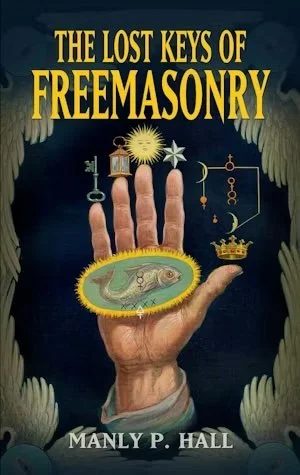
The Lost Keys of Freemasonry by Manly P. Hall
In his 1937 essay Rosicrucian and Masonic Origins, Brother Hall described Freemasonry as a vehicle for inner work—the moral and spiritual refinement that the Craft invites in every man. His interpretation wasn’t about secrecy for its own sake, but about the journey of personal transformation that the Lodge’s allegories and emblems are meant to guide.
In The Lost Keys of Freemasonry (first published in 1923, decades before he joined the fraternity), Brother Hall wrote that the true Mason seeks knowledge not for personal gain, but in service to others, and sees the Craft’s symbols not as secrets to be hoarded but as guides to universal truth. That he wrote with such depth and conviction before ever joining speaks to how naturally Freemasonry’s principles aligned with his own.
Manly P. Hall’s Legacy in Freemasonry and Philosophy
In 1934, Illustrious Brother Hall founded the Philosophical Research Society (PRS), a nonprofit educational center in Los Angeles dedicated to cross-cultural studies in religion, mythology, and philosophy. The PRS remains active today, preserving his extensive body of lectures, essays, and rare book collections.

An older Brother Manly P. Hall
The scope of his work was remarkable. Over the course of his life, Brother Hall delivered nearly 7,000 lectures—many running two hours or more, delivered extemporaneously and without notes. He built a world-class library of over 30,000 rare volumes and artifacts at the PRS. His private collection, comprising more than 240 manuscripts and 200 rare books on alchemy, Hermeticism, and Freemasonry, is preserved today at the Getty Research Institute, reflecting his lifelong dedication to protecting the symbolic traditions at the heart of esoteric and Masonic philosophy.
Illustrious Brother Hall passed away in 1990 at the age of 89, leaving behind a legacy of intellectual curiosity, ethical idealism, and a profound love of wisdom.
Why Manly P. Hall Still Matters to Freemasons in Illinois
Illinois Freemasonry has always focused on finding good men who represent and promote a quality life filled with honor, integrity, brotherly love, learning, and service to mankind. The life of Manly P. Hall is a living example of those ideals in action.
Brother Hall’s story reminds us that Freemasonry is not merely about ritual or rank. It is about the pursuit of wisdom, the cultivation of character, and a commitment to being useful to others. Whether in the lodge room or the lecture hall, he walked the path of a man dedicated to self-improvement and the betterment of society—values that are as central to Illinois Freemasonry today as they have ever been.
New to Freemasonry? What to learn more?