Brotherhood Beyond Service: A Navy Veteran Finds Fellowship with a Purpose
Military service and Freemasonry have long shared common ground. Both are built on duty, discipline, and a bond between men who look out for one another. Few Brothers can speak to that better than Brother Rabbi Rob Thomas of Harmony Lodge No.3 in Jacksonville, IL.
Answering the Call
Brother Thomas grew up in Jacksonville, Illinois, where the town’s ornate Masonic building was a familiar sight, even if he had little idea what happened inside. “I didn’t know any Masons, or I didn’t know that I knew any Masons,” he recalled.
After two years of college, Brother Thomas had no clear direction, and in 1987 he joined the U.S. Navy Reserve. He wanted to serve his country—the benefits would help pay for school, and he hoped the military would give him the structure he was missing. “I didn’t really have a lot of discipline, frankly,” he admitted.
He enlisted as a hospital corpsman, the Navy’s term for a medic. His first step was Field Medical Service School, where corpsmen train to serve alongside Marines, learning combat medicine and rifleman skills. After a week of classes and near-constant testing, the students headed into the field for a week of exercises with a rigorous schedule.
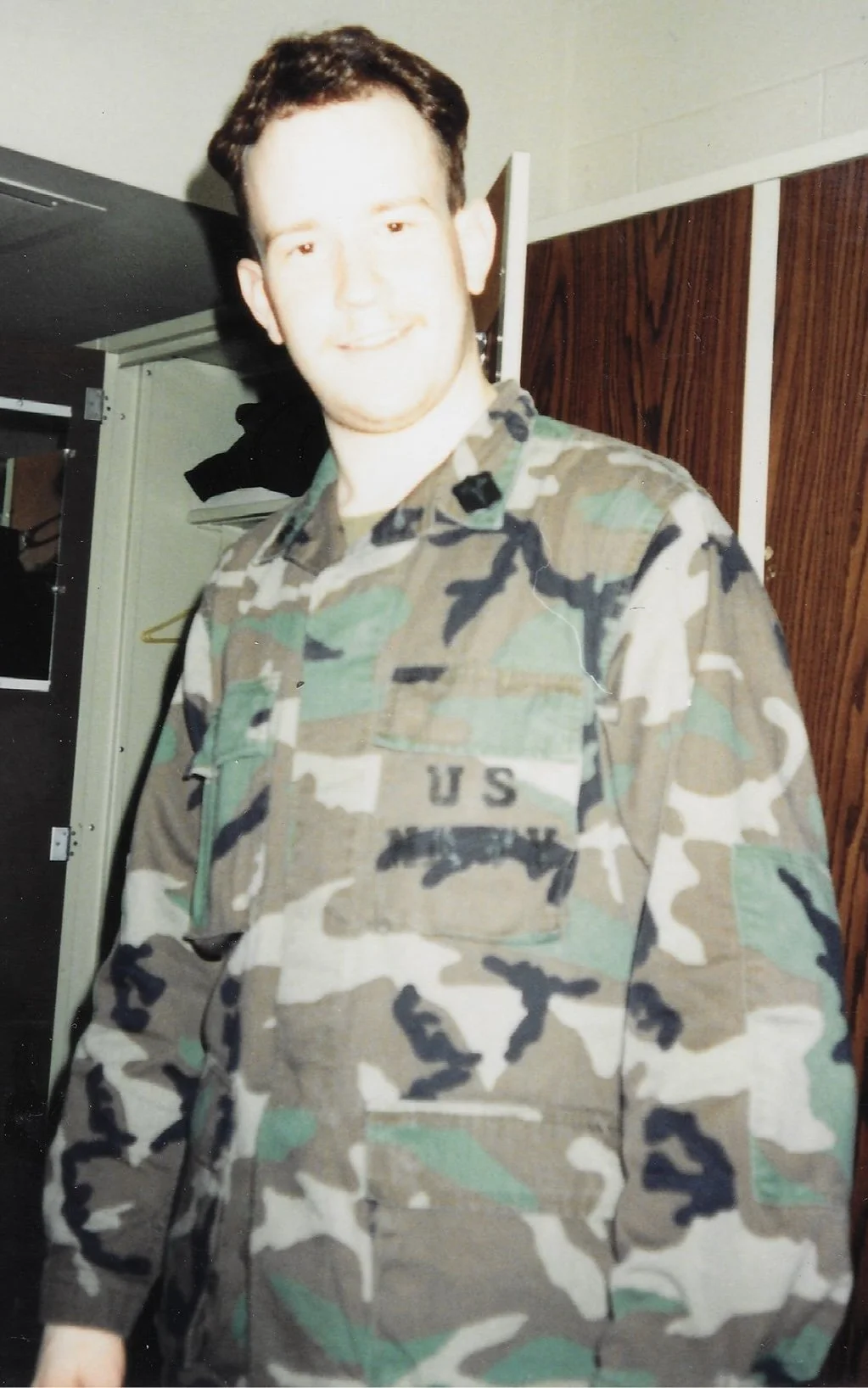
Brother Rabbi Rob Thomas in his USMC uniform
A Turning Point in Training
One night at Camp Del Mar, Brother Thomas and his fellow students were patrolling a pitch-black trail in formation. They took turns serving as patrol leader, radioman, and corpsman while instructors staged mock casualties along the way. Without warning, a role-player stepped out of the tall weeds and opened fire on the patrol with blanks. The instructors ruled that the front half of the patrol had been killed in the ambush. Those students had to lie down where they stood while the rest knelt and waited for instructions that never came.
Tired, hungry, and more than a little frustrated, Brother Thomas stood up, aimed his wooden training rifle at the attacker, and said, “Bang.” To the class’s surprise, the instructor agreed with this approach and declared the attacker dead. Brother Thomas’ training took over from there. He rallied the remaining students and led them back down the trail to cover, earning a rare compliment from instructors who had offered none all week: “Nice job.”
That moment changed the course of his service. Brother Thomas was soon offered a more specialized reserve role, one of only three students selected. He went on to serve eight years in the Navy Reserve. The work took him around the world and taught him lessons in culture, language, and human nature that he still carries with him. “You learn very quickly how similar we all are,” he said, “and you learn very quickly how different we all are.”
What Brotherhood Really Means
One moment from those years has stayed with Brother Thomas above all others. During an operation with his team, he found himself in a situation he had handled many times before, and he made the same split-second call he always made. This time, it was the wrong one, and he knew instantly that it could cost him his life. However, his life didn’t flash before his eyes—he remembers only one thought: “Not like this.”
Before he could pay the ultimate price, a teammate grabbed him hard by his pack and pulled him back. Brother Thomas hadn’t even realized the man was that close. There was no time to talk in the moment. Later, once things had quieted down, Brother Thomas found him and thanked him for saving his life. His teammate simply replied, “You would have done the same for me.”
He was right, and that is what made the moment so meaningful. The two men had nothing in common and genuinely did not get along. They used to joke that on a mission, they were the best two teammates in the military, and off the job, they kept to separate corners.
“That’s what brotherhood looks like,” Brother Thomas said. “It isn’t that I really like you or that we’re great friends. I don’t care that we don’t get along. I don’t care that we’re different faiths. None of that mattered.”
After his service, he found himself searching for that brotherly bond again. Dinners with old friends offered glimpses of that feeling, but everyday civilian life rarely offered anything like it.
Finding Freemasonry
After years of living and traveling around the world, Brother Thomas and his wife, Lauren, began spending time in Jacksonville to help care for his father. Monthly visits soon became more permanent as they fell in love with the town.
While they were settling in, Brother Thomas helped lead efforts to restore buildings on the town square, and local journalist Right Worshipful Brother Jeremy Coumbes, who you may know now as Deputy Grand Secretary, interviewed him about the work. During one of their conversations, Brother Thomas noticed the square and compass on Brother Coumbes’ notebook and asked about it. Brother Coumbes shared his own Masonic journey, and two ideas immediately stood out.
The first was that Freemasonry makes good men better. “We don’t make mediocre men good,” Brother Thomas said, reflecting. “When you realize you’re among the best, it makes you want to be better.”
The second was that politics and religion are not discussed in Lodge. “Now, I’m a rabbi. I have no problem talking about religion,” he said with a laugh. Still, he values a place where men can set aside the topics that so often divide them and see one another as whole people.
This conversation was all Brother Thomas needed to hear. “I said, you know what? I don’t need to hear anymore. Give me a petition.” He became a Mason at Harmony Lodge No. 3 in 2024 and hasn’t looked back. Brother Thomas believes the personal invitation mattered as much as anything he said. “It was a guy I respected and liked, saying, ‘I’m part of this thing, and here’s why it resonates with me.’”
Fellowship with a Purpose
Grand Master Joseph B. Ferrell’s theme this year is Legacy and Fellowship, and for Brother Thomas, fellowship is what makes the Lodge special. He is quick to point out that it is fellowship “with a purpose”. Men could simply spend time together anywhere, but a Lodge brings together Brothers who are committed to helping one another grow.
“You’re going to meet great men across a wide variety of skills, ages, and backgrounds,” he said. “All of them are dedicated to you getting better. And all of them are going to expect you to help them get better.”
At Harmony Lodge, legacy is personal and local. New Brothers are helping to grow the Lodge by bringing in petitions from friends. “We focus a lot on the legacy we can build,” Brother Thomas said.
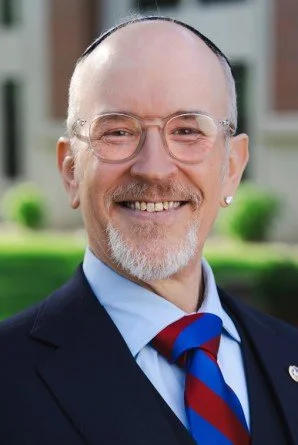
Brother Rabbi Rob Thomas headshot
Advice for New Brothers
For men who are curious about Freemasonry or new to the fraternity, Brother Thomas’s first piece of advice is to go at your own pace. The degrees hold a great deal to absorb, and as a rabbi, he compares them to the Torah. Jewish congregations read a portion of this Book each week, completing it over the course of a year and then beginning again. “The Torah doesn’t change, but we do,” he said. “So we get something new out of it each time.” He encourages new Brothers to lean in as much as they are comfortable, to explore the appendant bodies when the time is right, and to always keep family first, as Freemasonry itself teaches.
Above all, he sees the fraternity as a constant through every stage of life. “Freemasonry is a lifetime commitment and a lifetime blessing,” he said. “The seasons of life will change, but Freemasonry is the sky. It’s always going to be there for you.”
That is why he urges men to build those connections now, before they need them. Men are often reluctant to ask for help, he notes, and Freemasonry offers a way to change that. “Connect now, so that one day you feel comfortable calling a Brother and saying, ‘I’m having the worst day, and I just need to talk to somebody.’”
This Veterans Day, we thank Brother Thomas and every Brother who has served our country.
Interested in learning more about Illinois Freemasonry? Join us.