
5 Masonic Books Every Brother Should Know
Somewhere in Illinois tonight, a newly raised Master Mason is sitting on his couch with a book his mentor handed him after Lodge. He has questions he did not get to ask, symbols he is still trying to decipher, and the strong sense that what just happened to him meant something he has not yet caught up with.
He is not the first Brother to feel that way. He will not be the last. And the good news is that Masons have been writing for one another about exactly this experience for more than three hundred years.
In 2016, the Southern California Research Lodge surveyed Masons across the country to compile a list of the most essential books in Masonic literature. They expected to publish a top ten. They ended up with twenty-five. The full list is a useful starting place for any Brother interested in independent study.
What follows is a short reading list drawn from that survey: five books that together offer a strong foundation in the Craft. Read them in any order. Read them slowly. And then keep reading.
1. Freemasonry for Dummies — Christopher Hodapp
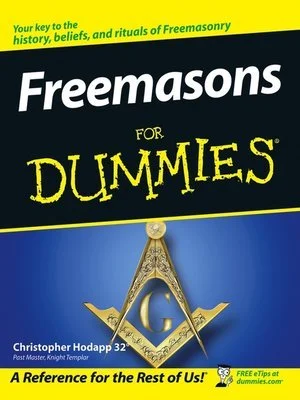
Freemasons For Dummies by Christopher Hodapp — a plain-language introduction to the Craft.
This is the book most Brothers wish they had read before petitioning. Christopher Hodapp, a Past Master from Indiana, wrote it as an accessible, plain-language overview of the fraternity for anyone curious about what Masons actually do.
The book covers the basics every new Mason eventually picks up in fragments: the history of the Craft from operative stonemasons to the modern Grand Lodge system, the meaning of common symbols, the structure of the three degrees, the appendant bodies, and the customs and etiquette of Lodge life. Hodapp writes with humor and clarity, making it useful both for prospects trying to decide whether Freemasonry is right for them and for newly raised Master Masons trying to make sense of what they have just experienced.
If your Lodge has men asking questions about the fraternity, this is the book to hand them.
2. The Builders: A Story and Study of Masonry — Joseph Fort Newton
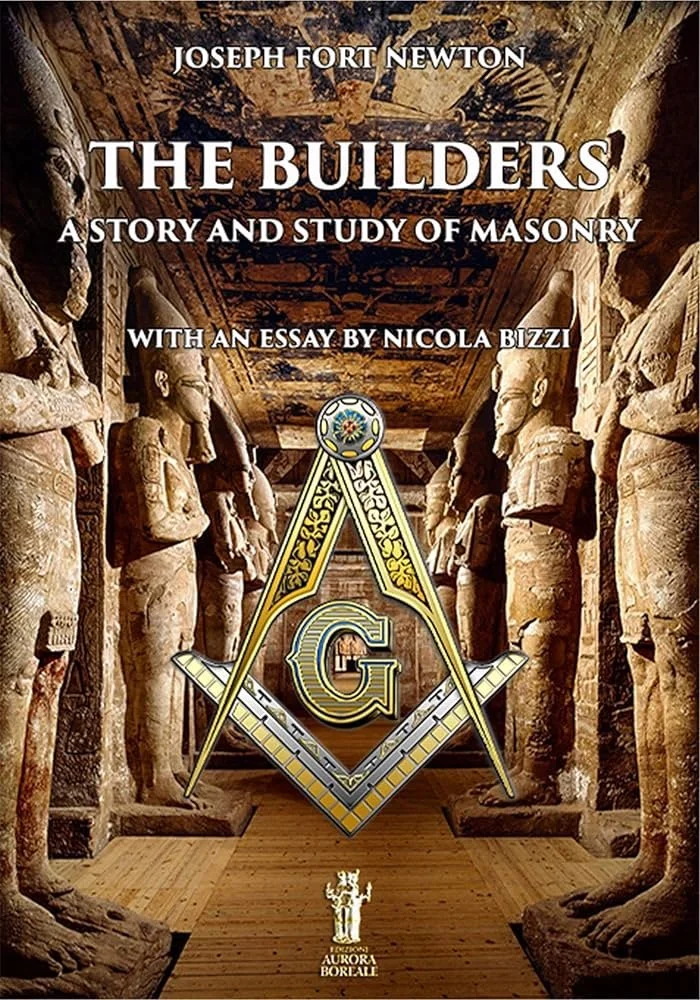
The Builders: A Story and Study of Masonry by Joseph Fort Newton — a foundational survey of Masonic history and meaning.
First published in 1914, The Builders has remained in print for over a century, and for good reason. Joseph Fort Newton was a Baptist minister, a gifted writer, and a Brother who believed the Craft deserved to be understood as more than a club.
The book traces the long arc of Masonry from the operative stonemasons of the medieval cathedrals to the speculative fraternity of the eighteenth century and beyond. But Newton's real subject is the moral and philosophical purpose of Freemasonry: why men gather, what they teach one another, and what the Craft asks of its members. His prose is closer to poetry than to history, and the result is a book that has shaped how generations of Masons think about their obligations.
Many Lodges still use The Builders in their education programs. It rewards a careful first reading and an even better second one.
3. The Meaning of Masonry — Walter Leslie Wilmshurst
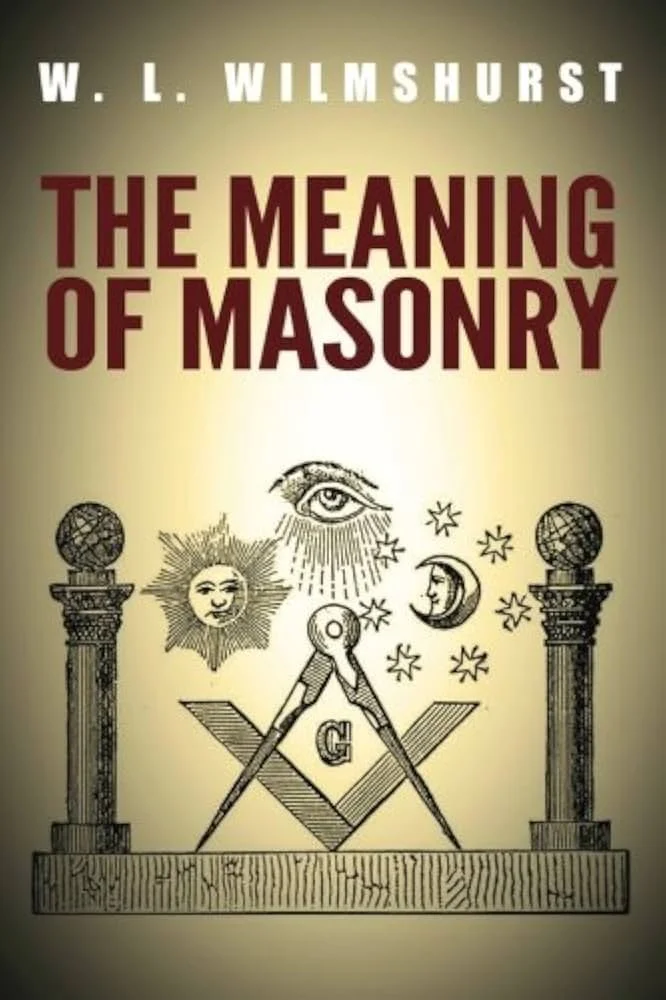
The Meaning of Masonry by W. L. Wilmshurst — a classic exploration of the philosophy behind the ritual.
Walter Leslie Wilmshurst was an English Mason who wrote in the early twentieth century about the inner, philosophical dimension of the Craft. The Meaning of Masonry collects a series of essays in which he argues that Masonic ritual is, at its heart, a system of moral and spiritual instruction that becomes more rewarding the more attention a Mason pays to it.
This is not light reading. Wilmshurst was a thoughtful man writing for other thoughtful men, and he assumes his readers are willing to sit with difficult ideas. But for Brothers who have begun to wonder why the ritual is structured the way it is, or what the symbols are really pointing at, Wilmshurst offers some of the most considered answers in print.
It is the kind of book that makes a Brother want to go back into Lodge and listen again.
4. Observing the Craft — Andrew Hammer
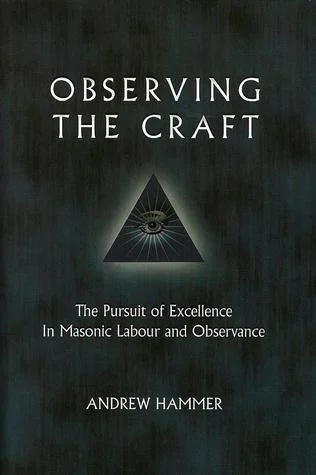
Observing the Craft by Andrew Hammer — a thoughtful argument for excellence in Masonic practice.
Of the books on this list, Observing the Craft is the most recent and the most pointed. Andrew Hammer, a Past Master of Alexandria-Washington Lodge No. 22 in Virginia, wrote it as a defense of what he calls “observant Masonry” — the practice of taking the Craft seriously enough to give it your best.
Hammer argues that a Lodge is, first and foremost, a Lodge of Masons. It exists to produce good Masons through dignified ritual, meaningful education, and brotherly fellowship done well. Service work, dining, and charity all matter, but they grow out of that core purpose rather than replace it. The book is short, opinionated, and useful. Brothers who finish it tend to walk back into their Lodge rooms with new questions about how their own Lodge is run.
Hand this one to any Mason who feels his Lodge could be doing more, and is not sure where to start.
5. American Freemasons: Three Centuries of Building Communities — Mark A. Tabbert
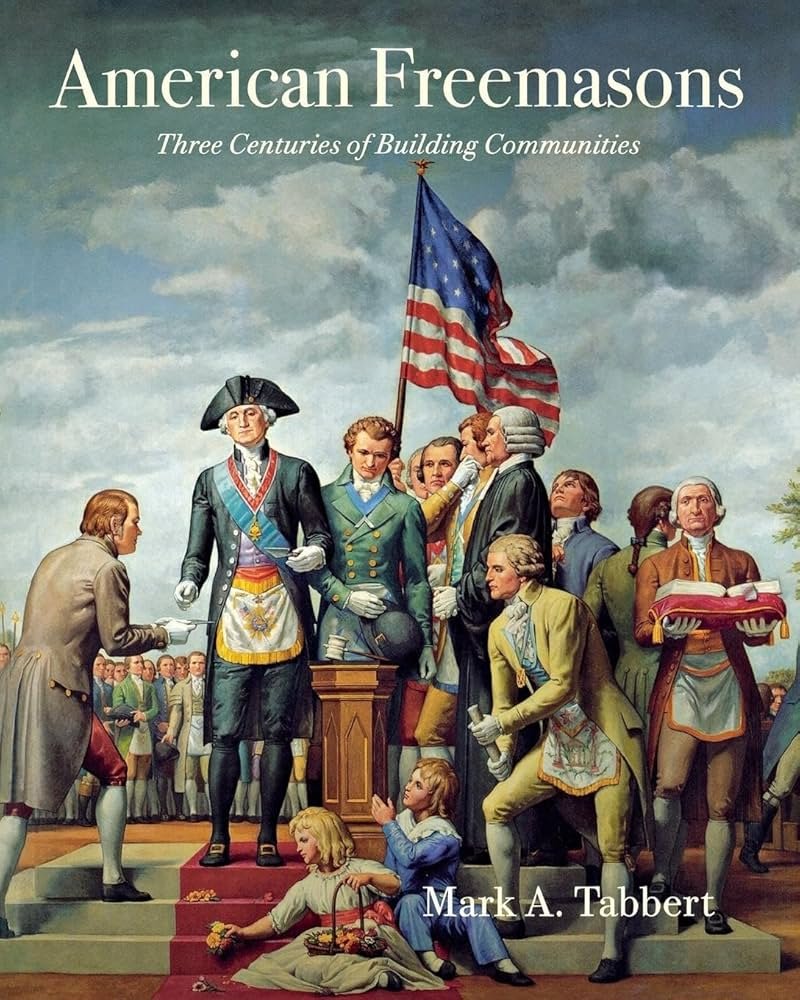
American Freemasons: Three Centuries of Building Communities by Mark A. Tabbert — a richly illustrated history of the fraternity in America.
For Brothers who want to understand the American story of the Craft, Mark A. Tabbert's book is the place to begin. Tabbert is the Director of Collections at the George Washington Masonic National Memorial, and he writes with the precision of a curator and the warmth of a Brother.
American Freemasons traces three centuries of the fraternity in the United States, from the colonial Lodges that counted George Washington and Benjamin Franklin among their members, through the explosive growth of the nineteenth century, the civic Masonry of the twentieth, and the questions facing the Craft today. For Illinois Masons, much of this history is local: the Grand Lodge of Illinois was chartered in 1840, and the story of American Masonry is, in part, the story of Lodges like ours.
It is a book that helps Brothers see themselves as part of something old, ongoing, and worth carrying forward.
Keep Reading
These five are a beginning. The full Southern California Research Lodge list contains twenty-five books, and many Brothers will find one that speaks directly to their interests, whether that is Masonic history, ritual study, symbolism, biography, or fiction. Ask the Brothers in your Lodge what they are reading. You will get more recommendations than you have time to follow.
You can also check out the Member Center section of our website for educational resources. If your Lodge does not have a library or an education program, consider starting one. A good book passed from one Brother to another is one of the older and better Masonic traditions.
Frequently Asked Questions
-
Most are available through general booksellers, including Amazon and Barnes & Noble. Some are also carried by Masonic supply houses such as Macoy Publishing and the Scottish Rite Research Society. Many Lodge libraries already hold copies.
-
Yes, many. The Southern California Research Lodge list of twenty-five titles is a strong place to look. Albert Pike’s Morals and Dogma, S. Brent Morris’s The Complete Idiot’s Guide to Freemasonry, and Robert G. Davis’s The Mason’s Words are all frequently recommended.
-
No. Becoming a Mason requires that a man be of good character and petition a Lodge in his jurisdiction. But Masonry has always been a fraternity that values learning, and most Brothers find that reading adds to what they take away from their experience in Lodge.